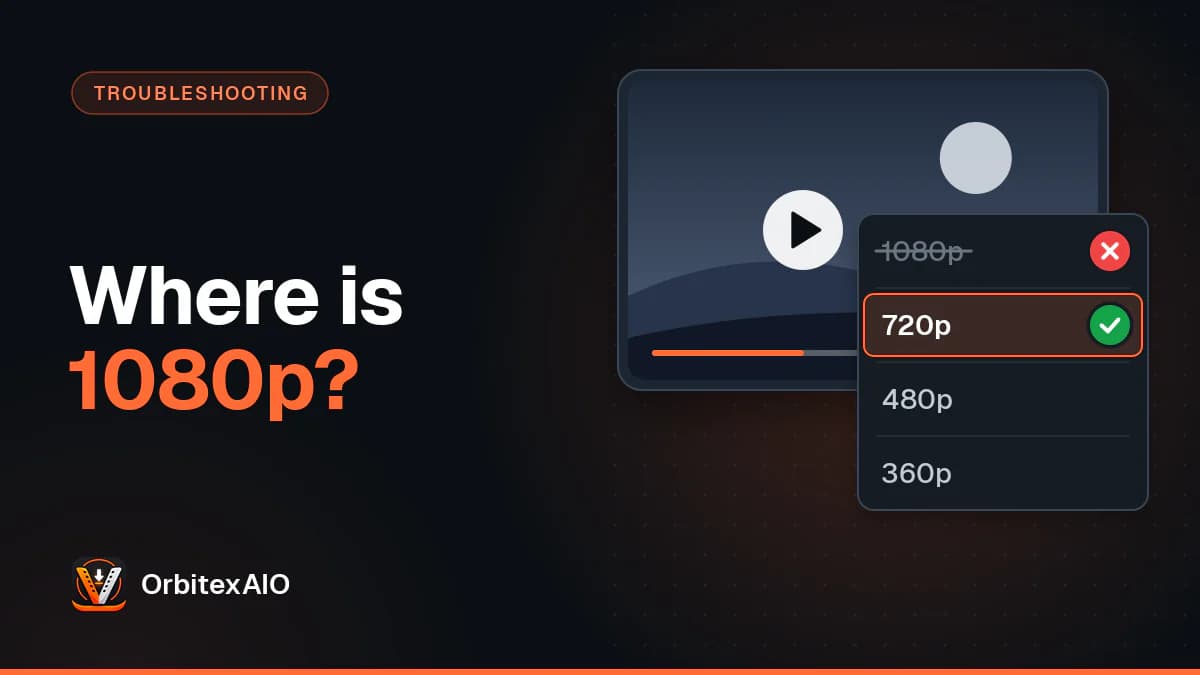
You open the quality menu expecting 1080p and the list stops at 720p. This is rarely a fault - it usually means no 1080p version of that video exists at all.
How a platform builds its quality list
When a video is uploaded, the platform re-encodes it into several versions at different resolutions and bitrates. That set is called a ladder, and the player picks a rung based on your connection speed and screen. The options in the menu are simply the rungs that exist.
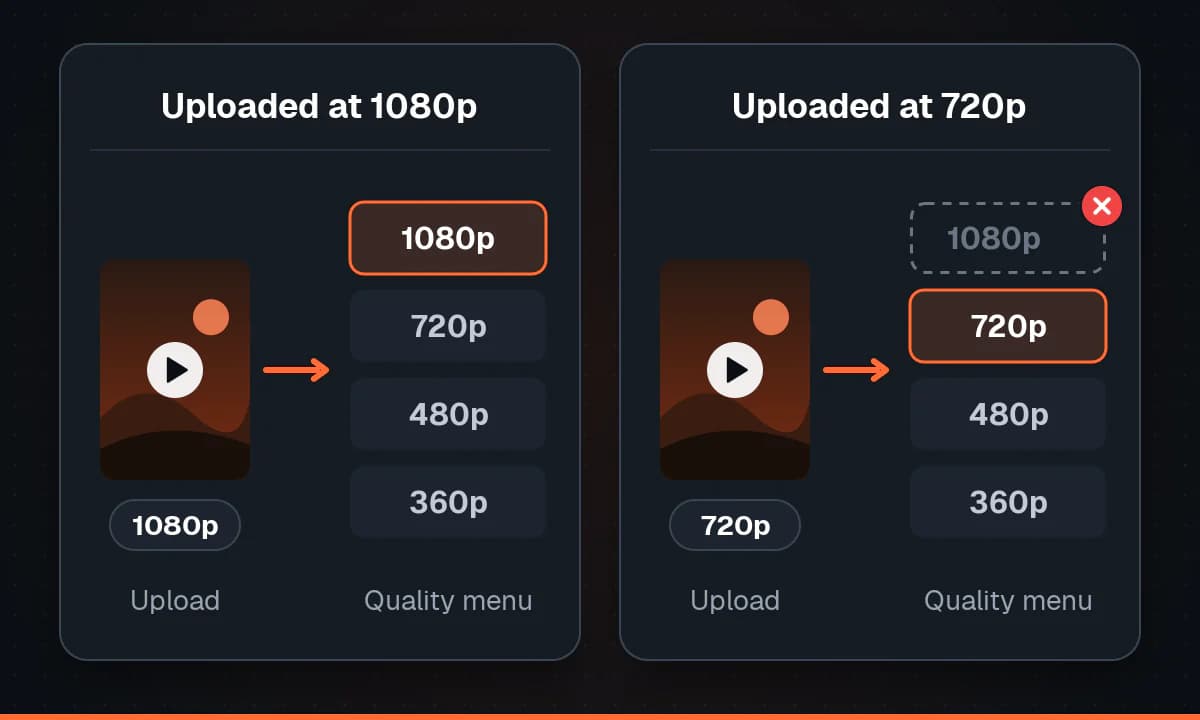
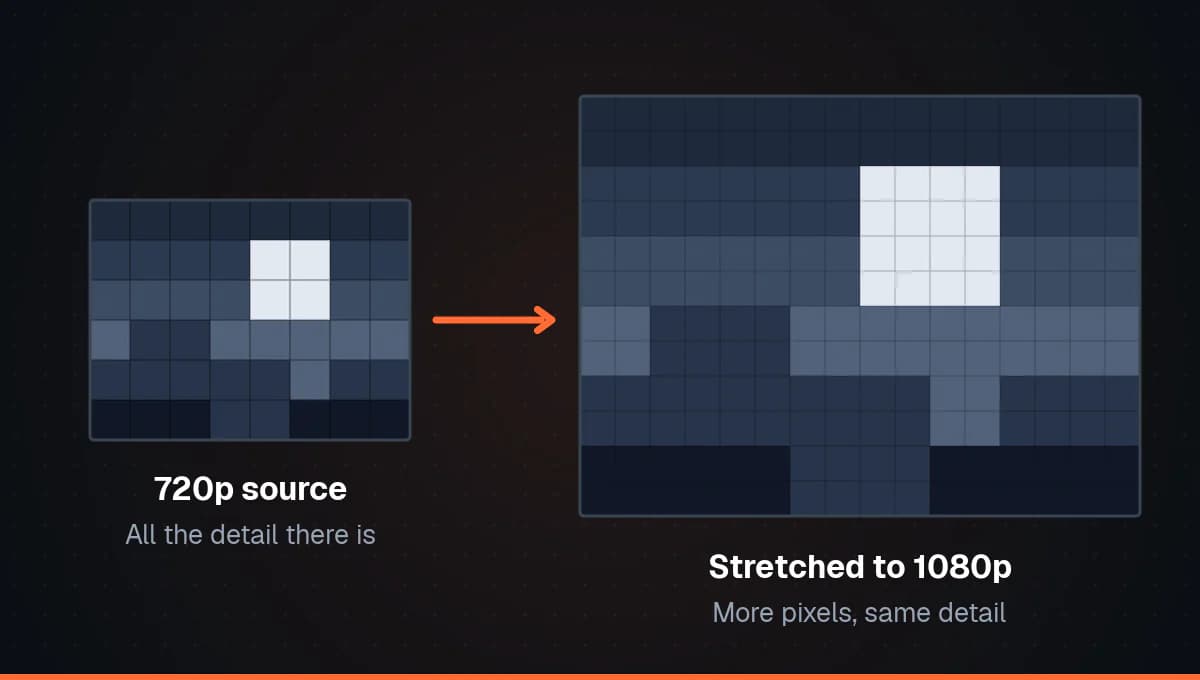
Crucially, a platform builds rungs at or below the source resolution. It will not create a 1080p version of a 720p upload, because upscaling adds file size without adding detail. So the first question is always: what was actually uploaded?
The upload was never 1080p
This is the most common answer by a wide margin. Older videos were often filmed and uploaded at 720p or below. Screen recordings inherit whatever the screen was. And many mobile apps compress video before it is uploaded at all, especially on a mobile connection or when the app is set to save data - so a clip that was 1080p in your camera roll can arrive at the platform as something smaller.
Note: Note
Vertical video confuses this. A phone clip at 1080 by 1920 is 1080 pixels wide and 1920 tall, so a platform may label it by its shorter side and show a number you did not expect.
The higher rungs are still being made
Encoding takes time, and platforms publish the lower rungs first so a video is watchable immediately. For a few minutes after upload - longer for long videos - the top of the ladder genuinely is not there yet. Come back later and it will be.
Live streams, replays and clips
Live content is encoded in real time, which puts a hard ceiling on what is possible. Replays typically preserve whatever the broadcast was, and clips cut from a stream inherit the same limit. If someone was streaming at 720p, no version of that moment will ever be sharper.
Platform policy and account tier
Some services reserve higher resolutions or higher bitrates for paid tiers, or cap what free accounts can publish. Some short-form feeds cap resolution deliberately to keep scrolling fast on weak connections. And older videos may still be sitting on encodes made under rules that have since changed.
Audio and video are often separate
Modern streaming usually delivers video and audio as separate streams that the player combines on the fly. That is efficient - one audio track can serve every video rung - but it means the highest-resolution video stream may exist as picture only. Anything offering it as a finished file has to combine the two first, which is why a top-tier option can take a moment longer to prepare or occasionally be unavailable.
What to check when 1080p is missing
- Open the same video in the platform's own player and look at its quality menu. If 1080p is not there either, it does not exist.
- If the video was posted minutes ago, wait and try again.
- Check whether it is a live replay or a clip from one, which caps the ceiling.
- Ignore any tool offering to upscale. Adding pixels does not add detail.
Warning: Important
A file advertised as higher resolution than the source has been stretched, not improved. It will be larger and no sharper.